
For $3.3 Billion Loan, El Salvador May Drop Mandatory Business Acceptance of BTC Payment


Original Article Title: "El Salvador Plans to Repeal Mandate for Businesses to Accept BTC Payments in Exchange for $3.3B IMF, World Bank Loan"
Original Article Author: DaFi Weaver, Dynamic Trend at BlockTempo
El Salvador became the world's first country to adopt Bitcoin (BTC) as legal tender in mid-2021, a decision that was met with strong criticism and pressure from the International Monetary Fund (IMF) at the time.
Prior to this, the Salvadoran government had been seeking an IMF credit line to address its fiscal issues, but the IMF demanded that El Salvador amend its Bitcoin law, stating that Bitcoin's legal tender status was a major obstacle to the country receiving credit support. As a result, negotiations between the two parties stalled for two years.
El Salvador Plans to Repeal Mandate for Businesses to Accept Bitcoin Payments
However, according to a report by the Financial Times citing sources familiar with the matter, El Salvador is currently in negotiations with the IMF and is considering taking a step back by repealing the legal requirement for businesses to accept Bitcoin as a form of payment. Instead, businesses would autonomously decide whether to accept Bitcoin payments in exchange for a $1.3 billion loan from the IMF.
The agreement is expected to be reached in the next two to three weeks. The report states that an IMF delegation has arrived in El Salvador to finalize the details of the agreement with President Nayib Bukele's government.
It is worth noting that the agreement with the IMF will also unlock two additional loans, one of $1 billion from the World Bank, and another of $1 billion from the Inter-American Development Bank. Therefore, in total, El Salvador plans to relax the Bitcoin acceptance requirement, with the opportunity to receive up to $3.3 billion in loans.
In order to reach an agreement with the IMF, El Salvador will also need to take measures to reduce the government deficit. Sources revealed that the Salvadoran government plans to reduce the budget deficit by 3.5 percentage points of GDP over the next three years through spending cuts and tax increases. Additionally, the government will pass an anti-corruption law and increase foreign reserves from $11 billion to $15 billion.
In response to this news, an IMF spokesperson declined to comment, citing the organization's policy of not discussing ongoing negotiations.
IMF Calls for Abandoning Bitcoin Strategy
The IMF has consistently opposed El Salvador's adoption of digital currency, citing risks to financial stability and integrity, and has often called on the Bukele government to cease accepting cryptocurrency as legal tender.
In October of this year, the IMF once again recommended that El Salvador scale back its Bitcoin-related policies and strengthen the regulatory framework for digital assets. Julie Kozack, Director of the IMF Communications Department, said at the time:
“We recommend narrowing the scope of the Bitcoin Law, strengthening supervision and regulation of the Bitcoin ecosystem, and limiting the government's exposure to Bitcoin.”
As early as two years ago, when El Salvador adopted BTC as legal tender, an IMF spokesperson criticized the country's Bitcoin law, warning of “macroeconomic, financial, and legal issues” it would raise. The IMF has repeatedly highlighted the volatility and potential risks of Bitcoin, which could threaten El Salvador's economic stability, hence the call for a reassessment of related policies.
However, in August of this year, the IMF also stated that many of the risks of El Salvador's Bitcoin experiment have “not materialized” yet. While the tone seems to have softened, the statement added that El Salvador needs to minimize the risks associated with adopting Bitcoin as legal tender as much as possible.
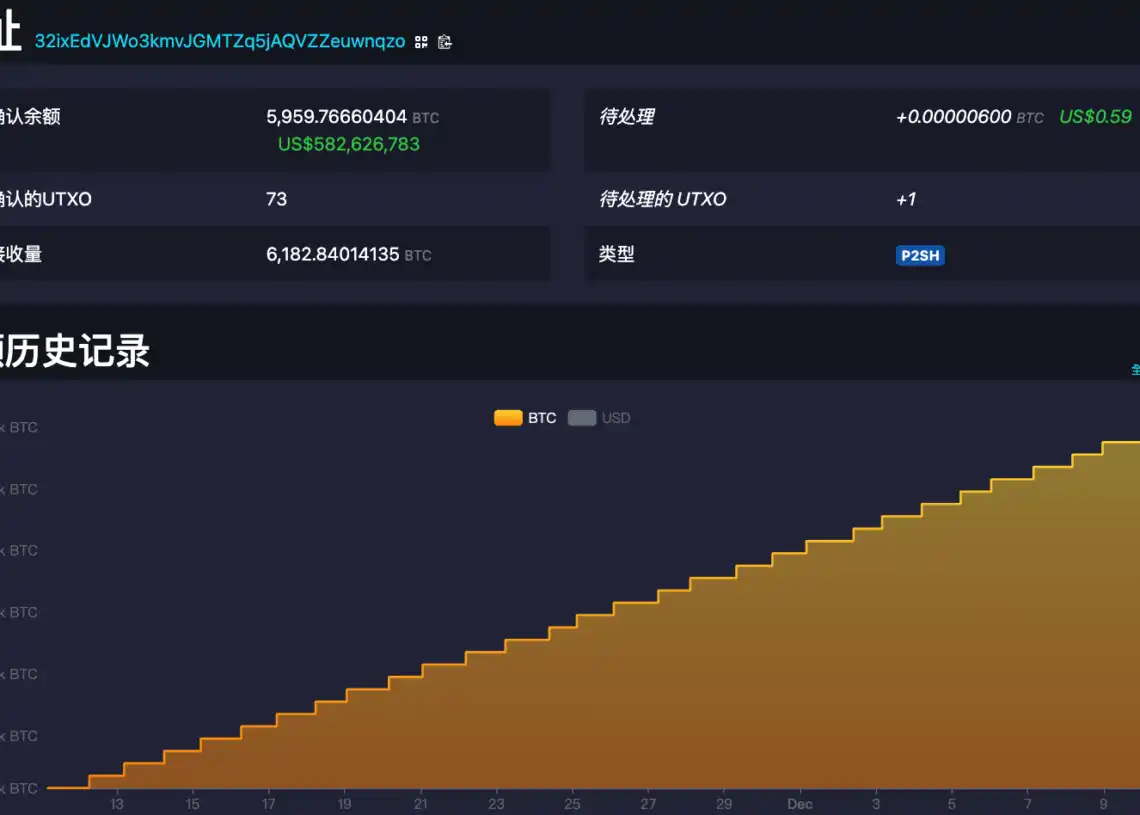
El Salvador Holds Nearly $600 Million in Bitcoin
Currently, El Salvador continues to purchase one Bitcoin per day, with a total Bitcoin holding of 5,960 coins valued at over $580 million.
As Bitcoin reached the $100,000 milestone, El Salvador's sovereign bonds also rebounded from a significant discount to near-par trading. Bukele commented last week on the simultaneous rise in bond prices and Bitcoin, stating:
“For the first time in history, Bitcoin has driven a sovereign bond up in traditional markets.”
You may also like

Why Is BlackRock Investing $5 Billion in the SpaceX IPO?

Cryptocurrency market makers collectively seek change as it becomes increasingly difficult to make money

a16z Crypto Partner: Cash flow is the moat

Citibank releases "2030 Asset Tokenization Market Outlook": 6 major trends may create a $8.2 trillion market

The trillion-dollar valuation test: Are the three major super IPOs a celebration for tech stocks or a nightmare for the crypto market?

Morning Report | Digital Asset completes $355 million financing led by a16z Crypto; Meta completes operational separation from Manus
Morning News | CME Group launches Nasdaq Cryptocurrency Index futures; Asset management giant Janus Henderson strategically invests in Ethena

Bitcoin Layer 2 Network Botanix: Why Did We Choose to Dissolve?

Why did Oracle deliver the strongest financial report in history, yet its stock price fell?
When the P2P illicit funds from ten years ago turned into 60,000 bitcoins

Dialogue with OmenX Founder: Why does the prediction market need an evolution from "spot" to "derivatives"?
Galaxy in-depth report: Is Solana still worth paying attention to?

Young people in South Korea make a "final effort" in the epic bull market
The pricing controversy of Trade.xyz exposes the fatal weakness of Pre-IPO perpetual contracts
How much longer can Ethereum's last big buyer hold on?

World Cup 2026 Coming – WEEX Celebrates with $1M Prize Pool & Michael Owen Live

Morning Report | OpenAI has submitted an S-1 registration statement draft to the U.S. SEC; Morpho completes $175 million financing

Galaxy Deep Research Report: How Hyperliquid's HIP-4 Upgrade Changes the Landscape of Prediction Markets?
Why Is BlackRock Investing $5 Billion in the SpaceX IPO?
Cryptocurrency market makers collectively seek change as it becomes increasingly difficult to make money
a16z Crypto Partner: Cash flow is the moat
Citibank releases "2030 Asset Tokenization Market Outlook": 6 major trends may create a $8.2 trillion market
The trillion-dollar valuation test: Are the three major super IPOs a celebration for tech stocks or a nightmare for the crypto market?
Morning Report | Digital Asset completes $355 million financing led by a16z Crypto; Meta completes operational separation from Manus


